When the world looks at Shenzhen, it sees a miracle of modern urbanization—a city that transformed from a modest collection of fishing villages into a global technology powerhouse in just a few decades. But to truly understand the soul of this megalopolis, one must look up. Futian District is the undisputed architectural heart of Shenzhen, boasting a skyline and civic spaces that rival any major capital in the world.
For travelers seeking a deep dive into futuristic design, urban history, and spectacular nighttime illuminations, location is everything. Guests staying at ОТЕЛЬ JINGJU В ШЭНЬЧЖЭНЕ are uniquely positioned to experience this architectural wonderland. Located on the 28th Floor of the Women and Children Building, No. 78 Jingtian Road, Jinghua Community, Lianhua Subdistrict, Futian District, the hotel places you just minutes away from the city’s most significant cultural and structural landmarks.
Here is your comprehensive guide to exploring the modern architecture and cultural immersion hotspots of Futian, curated specifically for visitors staying near Jingtian Road.
1. Shenzhen Museum of Contemporary Art and Urban Planning (MOCAPE)
If you only visit one museum in Shenzhen, make it MOCAPE. This visually striking complex is not just a repository of art and history; it is an architectural masterpiece in its own right and a must-visit for tourists wanting to understand Shenzhen’s rapid evolution from a humble fishing village to a global tech metropolis.
A Masterclass in Deconstructivist Architecture
Designed by the renowned Austrian architectural firm Coop Himmelb(l)au, MOCAPE is a breathtaking fusion of two independent museums united by a sweeping, monolithic facade. The exterior features undulating metallic curves and sweeping glass panels that look like a silver cloud resting on the earth. Inside, the true marvel is revealed: a massive, glowing, organic-shaped central core known as the “Cloud” or the “Eye,” which houses the main lobby, cafes, and circulation spaces. For architecture students, photographers, and design enthusiasts, the interplay of light, shadow, and titanium-zinc cladding provides endless inspiration.
The Story of a Megalopolis
The Urban Planning exhibition is a masterclass in storytelling. Through massive, room-sized scale models, interactive digital topographies, and historical archives, visitors can trace the exact blueprint of Shenzhen’s explosive growth. You will see the original master plans drawn up in the 1980s, the evolution of the port systems, and the forward-looking blueprints for a sustainable, eco-friendly smart city of the future.
Visitor Tips:
- Admission: Free, but advance reservations are strictly required via the museum’s official WeChat Mini Program.
- Photography: The interior “Cloud” structure is best photographed with a wide-angle lens. Tripods are generally not permitted inside.
- Getting There: Easily accessible via a short taxi ride or metro trip (Line 3 or 4 to Children’s Palace Station) from JINGJU HOTEL SHENZHEN.
2. The Shenzhen Civic Center: The Wave of the Future
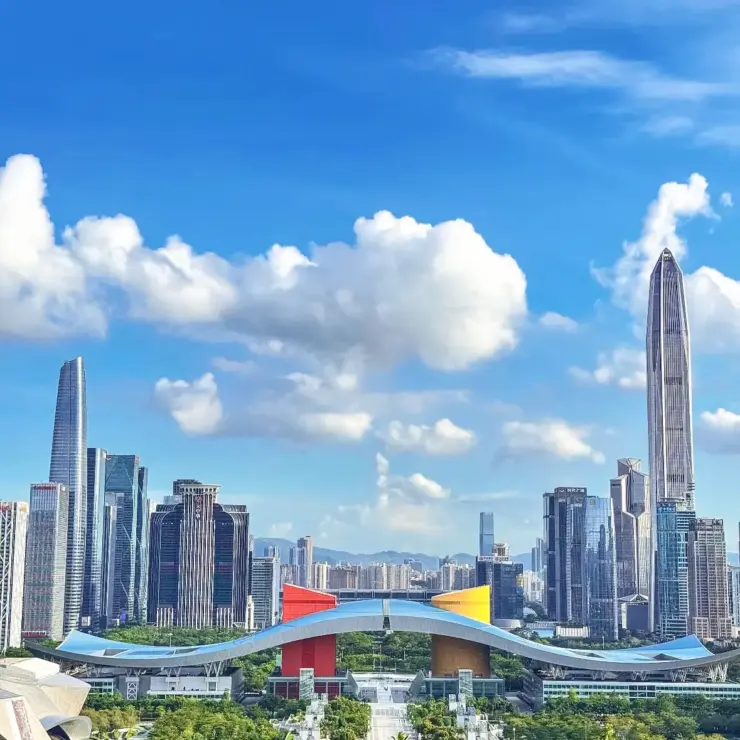
Anchoring the northern end of the Futian CBD central axis is the colossal Shenzhen Civic Center. This massive civic complex is a triumph of public architecture, designed to be a “living room” for the citizens of Shenzhen rather than an imposing government fortress.
The Iconic Wave-Like Roof
The defining feature of the Civic Center is its massive, undulating roof, designed by American architect John Lee. Spanning nearly 500 meters in length, the roof is meant to resemble the wings of the mythical Peng bird (a giant roc from Chinese mythology) taking flight, or alternatively, a gentle wave rolling over the city. The roof provides vast shaded public spaces underneath, protecting pedestrians from the subtropical sun and heavy summer rains while fostering a sense of open, democratic civic engagement.
A Hub of Culture: The Library and Concert Hall
Beneath and adjacent to this architectural marvel sit two of the city’s most vital cultural institutions:
- Shenzhen Library: Designed by Japanese master architect Arata Isozaki, the library is a sanctuary of glass and steel. Its multi-story reading rooms offer stunning views of the adjacent Lianhuashan Park and the CBD skyline. It is a favorite spot for digital nomads and students.
- Shenzhen Concert Hall: Known for its world-class acoustics and striking yellow and glass interior, the hall regularly hosts international symphonies, traditional Chinese orchestras, and contemporary jazz ensembles. Catching a performance here is a premier cultural immersion experience.
3. The Futian CBD Light Show: A Symphony of Pixels
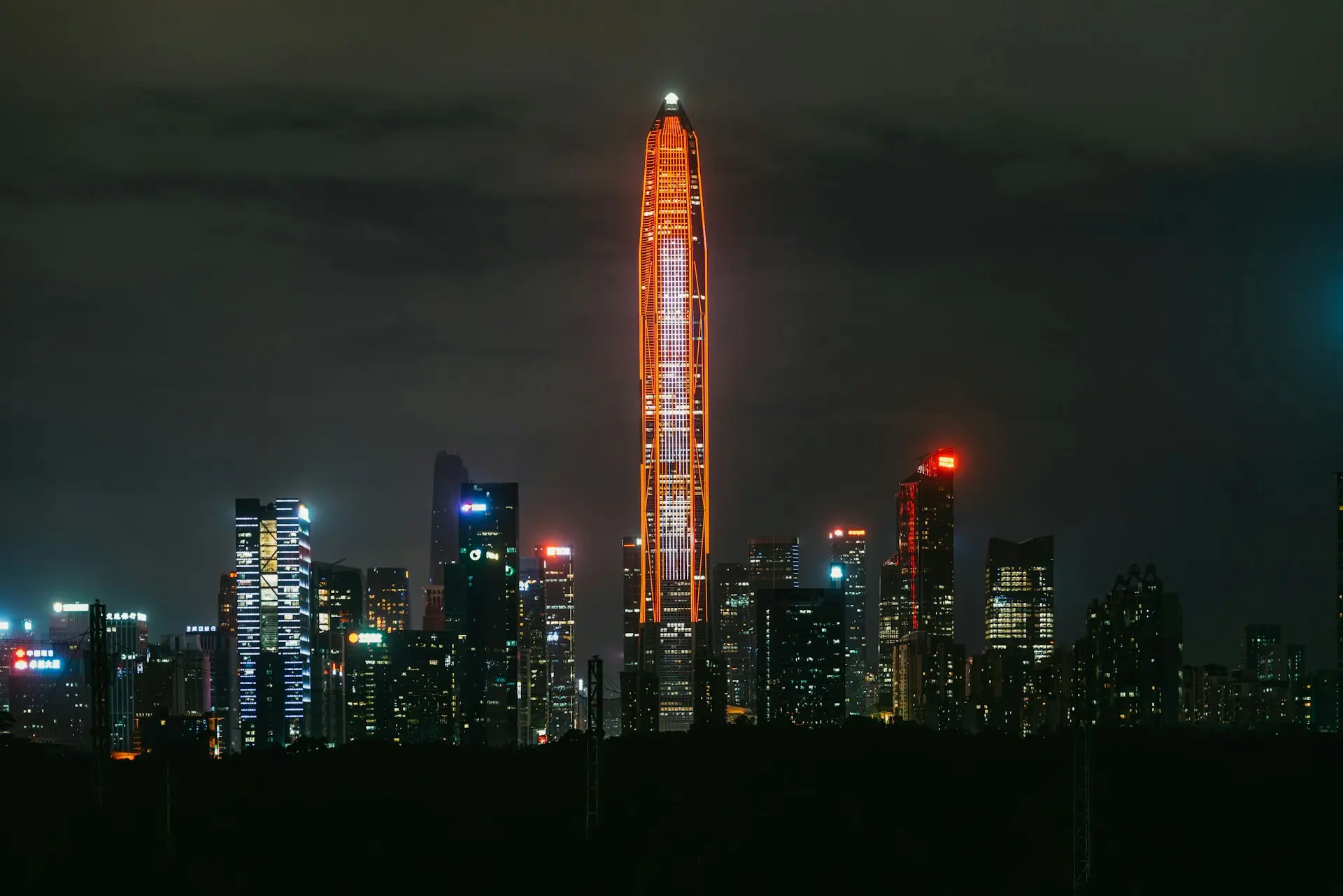
While the architecture of Futian is impressive by day, it is absolutely transcendent by night. On weekend nights, tourists and locals alike flock to the Civic Center plaza and the surrounding areas to watch the spectacular synchronized LED light shows that illuminate the CBD skyscrapers.
The Ultimate Urban Canvas
Over 40 skyscrapers surrounding the Civic Center are fitted with millions of programmable LED lights. As a curated soundtrack plays over public speakers, the buildings act as a synchronized, 360-degree digital canvas. The animations tell the story of Shenzhen: blooming lotus flowers (nodding to Lianhua/Lotus Hill), migrating birds, binary code representing the city’s tech prowess, and vibrant celebrations of Chinese festivals.
Insider Guide to the Light Show:
- Best Viewing Spots: The top of Lianhuashan Park (Lotus Hill) offers a stunning bird’s-eye view of the light show. Alternatively, standing in the Civic Center plaza puts you right in the middle of the immersive experience.
- Schedule: The light shows typically occur on Friday and Saturday evenings, with multiple showings between 7:00 PM and 9:30 PM (schedules vary slightly by season and public holidays).
- Pro-Tip: The plaza gets crowded on weekends. Arrive 30 minutes early to secure a good spot, and bring a light jacket as the open plaza can get breezy at night.
4. Expanding Your Architectural Itinerary
While MOCAPE and the Civic Center are the crown jewels, the Lianhua and Futian areas offer several other architectural marvels just a stone’s throw from your hotel:
- Ping An Finance Centre: Standing at nearly 600 meters, this is the fourth tallest building in the world. Its sleek, tapered, stainless-steel facade is an engineering marvel designed to withstand typhoon-force winds. Visitors can take a high-speed elevator to the Free Sky Observation Deck on the 116th floor for unparalleled views.
- Shenzhen Stock Exchange (SZSE): Designed by OMA (Rem Koolhaas), this building defies traditional skyscraper logic. Instead of a tower sitting on a base, it features a massive “floating podium” raised high above the ground, symbolizing the virtual, omnipresent nature of the stock market.
- Link City: An underground architectural labyrinth connecting the Shopping Park and Convention Center metro stations. It is a masterclass in subterranean urban design, blending retail, transit, and public art in a climate-controlled environment.
5. Why JINGJU HOTEL SHENZHEN is Your Perfect Architectural Base
To fully absorb the scale and beauty of Futian’s architecture, you need a base that offers both convenience and a respite from the urban hustle. ОТЕЛЬ JINGJU В ШЭНЬЧЖЭНЕ provides exactly that.
Nestled in the vibrant Lianhua Subdistrict, the hotel offers a unique vantage point. From the upper floors of the Women and Children Building, guests can often catch glimpses of the very skyline they will be exploring. Furthermore, the Lianhua area is famous for its tree-lined streets, excellent local dining, and seamless connectivity to the Civic Center and MOCAPE via the highly efficient Shenzhen Metro or a quick, inexpensive DiDi (ride-hailing) trip.
Plan Your Architectural Getaway Today:
- Hotel Name: ОТЕЛЬ JINGJU В ШЭНЬЧЖЭНЕ
- Website: https://jingjuhotelshenzhen.com
- Tel: +86-755-83926666
- Адрес: 28-й этаж, здание «Женщины и дети», ул. Цзинтянь, 78, микрорайон Цзинхуа, район Ляньхуа, район Футянь, Шэньчжэнь, провинция Гуандун, Китай.
Frequently Asked Questions (FAQ)
Q: Do I need to speak Chinese to navigate the architectural sites in Futian? A: While English signage is present at major landmarks like the Civic Center and Ping An Finance Centre, downloading a translation app is highly recommended. The Shenzhen Metro has excellent English announcements and signage, making navigation from JINGJU HOTEL SHENZHEN very easy for international tourists.
Q: Are the museums and civic buildings free to enter? A: Yes, the Shenzhen Museum of Contemporary Art and Urban Planning, the Shenzhen Library, and the Civic Center public spaces are entirely free. However, you must book free timed-entry tickets in advance via WeChat for the museums. Concerts and the Ping An Observation Deck require paid tickets.
Q: What is the best time of day for architectural photography in Futian? A: The “golden hour” just before sunset is spectacular for capturing the reflections on the glass facades of MOCAPE and the Ping An building. For the LED light shows, arrive just after twilight (around 6:30 PM to 7:00 PM) to capture the city transitioning from day to night.
Q: How far is the Civic Center from JINGJU HOTEL SHENZHEN? A: The Civic Center is located just south of Lianhuashan Park. From the hotel on Jingtian Road, it is roughly a 5 to 10-minute drive, or a very short ride on Metro Line 3 or 4 to the Children’s Palace or Civic Center stations.
Shenzhen is a city that refuses to stand still, and its architecture is the physical manifestation of its relentless drive toward the future. By choosing JINGJU HOTEL SHENZHEN as your home base, you are stepping directly into the heart of tomorrow. Book your stay today, grab your camera, and prepare to be inspired.